How to Reduce Customer Acquisition Costs in 2026 Without Cutting Growth
Customer Acquisition Costs Are Rising. Here's the Good News.
Ask almost any ecommerce founder about their biggest challenge today and you'll hear the same answer: "Our customer acquisition costs keep increasing."
Whether you advertise on Google, Meta, TikTok, Pinterest or emerging channels, acquiring customers has become more competitive than ever. Privacy changes have made attribution more complex, consumers have become more selective and competition has intensified.
Many businesses assume they have only two choices: increase budgets and accept lower profitability, or reduce spending and sacrifice growth.
In reality, there is a third option: lower your CAC while maintaining - and often accelerating - growth.
Businesses don't need dramatically larger budgets. They need more efficient systems. This guide walks through the strategies our performance marketing team uses to bring acquisition costs down while keeping the growth engine running.
What Is Customer Acquisition Cost (CAC)?
CAC measures how much it costs to acquire a new customer. It is one of the most important numbers in any growth model because it directly determines how profitably you can scale.
CAC = Total Marketing and Sales Spend / Number of New Customers Acquired
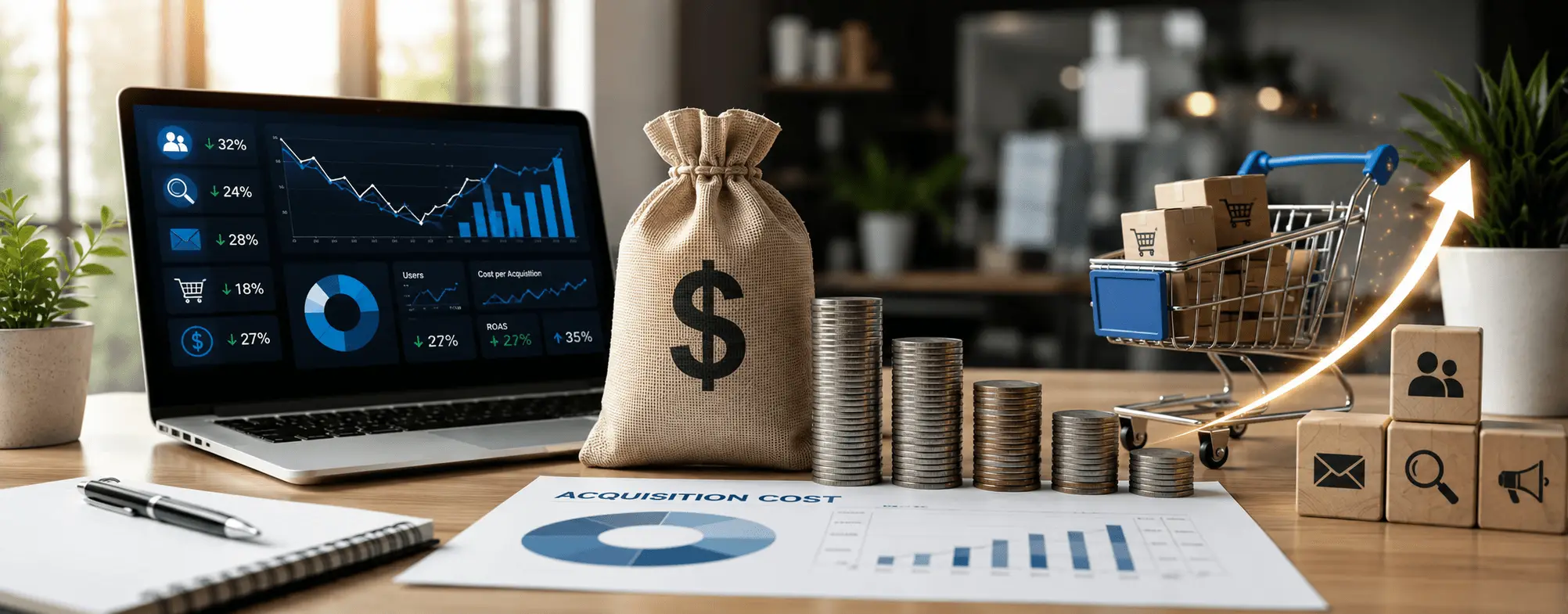
For example, $50,000 in spend that produces 500 new customers gives you a $100 CAC. The lower your CAC, the more profitable your growth.
A simple benchmark: $50,000 spend across 500 new customers equals a $100 acquisition cost. Every efficiency gain pushes this number - and your margin - in the right direction.
Why CAC Is Increasing in 2026
Acquisition has become more expensive for several compounding reasons. Understanding them is the first step to reversing the trend.
- Increased competition - more advertisers bidding for the same attention
- Creative fatigue - audiences tune out repeated messaging quickly
- Privacy restrictions - tracking and targeting have become harder
- Higher consumer expectations - shoppers demand more before they trust a brand
- Inefficient funnels - traffic arrives but fails to convert
The real goal isn't just lowering acquisition cost. It's reducing CAC while preserving revenue growth. The seven strategies below do exactly that.
7 Strategies to Lower CAC Without Slowing Growth
These strategies attack acquisition cost from every angle - from the ads you run to the experience that converts and retains customers afterward.
Creative Testing at Scale
Great creatives reduce costs. Weak creatives increase them. Many brands launch one or two ads, then simply raise budgets when performance declines. The better approach is a structured creative testing framework.
Test across three dimensions:
- Hooks - problem-focused, outcome-focused, curiosity-driven
- Formats - UGC, founder videos, product demonstrations, static images, carousels
- Messaging - benefits, pain points, social proof, limited-time offers
In many accounts, creative quality has a greater impact on CAC than audience targeting. A simple framework: one concept, then 3 hooks, then 2 formats, then 2 CTAs, then identify a winning combination and scale the budget behind it.
Improve Landing Page Conversion Rates
Lowering CAC isn't always about reducing ad costs. Sometimes it's about increasing conversion efficiency. If more visitors convert, your effective acquisition cost decreases automatically.
Common problems we find during a conversion audit include weak headlines, slow loading times, limited trust signals, unclear CTAs and poor mobile experiences. The Baymard Institute reports average cart abandonment near 70%, which shows how much revenue leaks at the finish line.
High-impact CRO focuses on:
- Above-the-fold clarity - what you sell, why customers should care, why they should trust you
- Social proof - reviews, testimonials, UGC and customer counts
- Reduced friction - fewer steps, faster pages, simpler CTAs
Principles from Nielsen Norman Group are a strong foundation for the UX side of this work.
Strategy 3Refine Your Audience Targeting
Broad targeting isn't always bad, but unstructured targeting wastes budgets. Ask who converts most profitably, who has the highest lifetime value and who repeats purchases.
- Existing customers
- Lookalikes of high-value buyers
- Website visitors
- Cart abandoners
- Engaged social audiences
- Past purchasers
Not all customers are equally valuable. Prioritize quality over quantity.Strategy 4
Fix Attribution Before Making Budget Decisions
One of the biggest mistakes is optimizing based on incomplete data. If attribution is wrong, you may pause winning campaigns or scale losing ones.
Common attribution problems include duplicate purchases, missing conversions, broken tracking and platform discrepancies. Regularly audit GA4, Google Ads, Meta Events Manager, Enhanced Conversions and server-side tracking.
The Campaigns Weren't Broken. Measurement Was.
An ecommerce business believed its Meta campaigns had become unprofitable. Their dashboard showed rising CAC. After reviewing attribution, we found:
- Purchase events were underreporting
- Enhanced Conversions had not been implemented correctly
- Cross-device activity wasn't being captured
Once tracking improved, budget decisions improved and CAC stabilized. See how measurement fixes play out in a full growth case study here.
Use Retention Marketing to Lower Blended CAC
Returning customers cost less to convert, and higher repeat purchase rates reduce pressure on acquisition. A small increase in repeat purchase rate can significantly improve overall profitability.
The retention tactics with the biggest impact include welcome flows, post-purchase education, cross-sell campaigns, win-back sequences and loyalty programs. Industry benchmarks from Klaviyo show owned channels can drive a large share of ecommerce revenue when these flows run well. Our email & SMS team builds these systems end to end.
Acquiring a new customer can cost roughly five times more than retaining an existing one - which is why retention is one of the fastest routes to a lower blended CAC.
Find Out Where Your CAC Is Leaking
Most brands overpay for customers because of fixable inefficiencies. Book a free audit and get a personalized review covering:
- Creative and campaign efficiency
- Conversion bottlenecks & attribution gaps
- Retention & SEO opportunities to lower blended CAC
Use SEO to Support Paid Media
SEO and paid advertising are often managed separately, which creates inefficiencies. In reality, organic visibility generates lower-cost traffic, increased trust and greater brand awareness.
SEO supports CAC reduction by capturing high-intent searches, improving branded search, building educational assets and strengthening product visibility. As Think with Google research shows, buyer journeys are long and multi-touch - so owning more of those touches organically reduces what you pay for each conversion.
Paid media generates demand. SEO captures and nurtures it.Strategy 7
AI-Powered Optimization
AI is becoming a practical lever for efficiency. Useful applications include creative analysis to identify winning patterns, audience insights, predictive segmentation, product recommendations and campaign optimization. Brands that also invest in AI SEO position themselves for the next wave of discovery.
AI enhances marketers. It doesn't replace strategic thinking. Human judgment remains essential for interpreting data and setting direction.
The 2026 Lower-CAC Framework
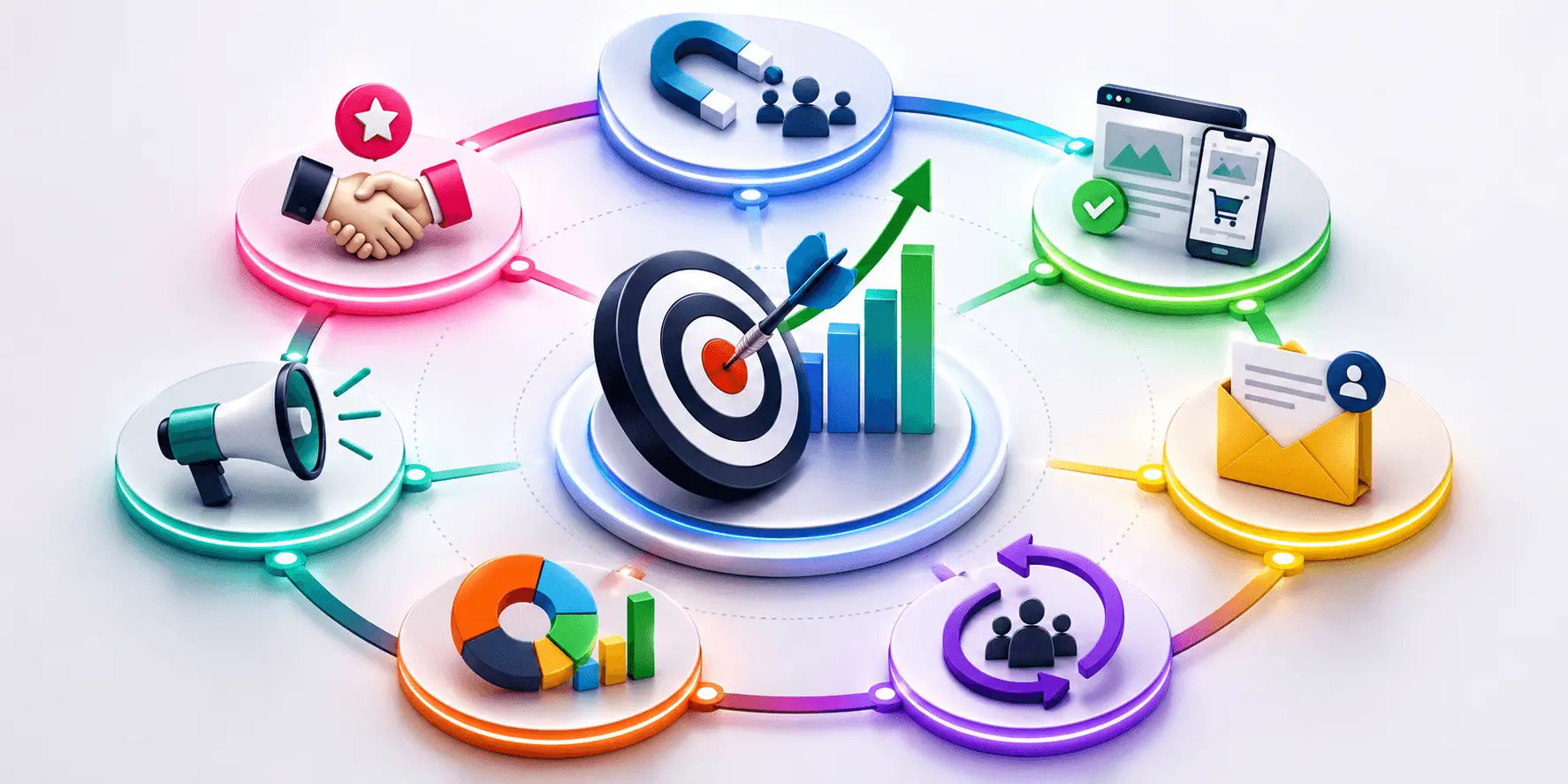
These strategies work best together. The framework combines four layers that compound to bring effective acquisition costs down.
Acquisition
- Creative testing
- Audience refinement
- Attribution accuracy
Conversion
- Landing page CRO
- Mobile optimization
- Trust building
Retention
- Email & SMS flows
- Loyalty programs
- Win-back campaigns
The fourth layer, long-term efficiency, ties it together through SEO, AI optimization and ongoing data analysis. When you're ready to build it as one system, our growth marketing team can help.
Need a Lower-CAC Roadmap?
If acquisition is getting too expensive, the answer is rarely more budget - it's a better system. We'll review your advertising performance, conversion funnels, attribution setup, retention opportunities and SEO support.
Schedule a Free Growth Strategy SessionCase Study: Reducing CAC Without Slowing Growth
A growing business experienced rising acquisition costs despite healthy traffic. Deeper analysis uncovered limited creative testing, weak product page trust signals, broken attribution and minimal retention marketing.
After expanding creative testing, enhancing product experiences, improving measurement accuracy and introducing lifecycle automations, the business improved marketing efficiency while continuing to grow.
Lower CAC came not from spending less, but from building a smarter system.
You can explore more results like this across our case studies.
Key Takeaways
The businesses that thrive in 2026 won't necessarily spend the most. They'll operate more intelligently by:
- Testing creatives relentlessly
- Optimizing conversion experiences
- Trusting accurate attribution data
- Investing in retention
- Leveraging SEO to support paid media
- Using AI as a strategic advantage
Reducing CAC isn't about cutting growth. It's about eliminating inefficiencies that quietly erode profitability.
Frequently Asked Questions
Final Thought
The businesses that win in 2026 won't be the ones with the biggest budgets. They'll be the ones operating more intelligently - testing creatives, optimizing conversion, trusting their data, investing in retention, leveraging SEO and using AI as a strategic advantage.
Reducing CAC isn't about cutting growth. It's about removing the inefficiencies that quietly erode profitability. When you're ready to build that system, our performance marketing team can help.
Ready to Lower Your Acquisition Costs?
Stop overpaying for customers. Let our specialists turn these strategies into a more efficient, profitable growth engine for your brand.