From Traffic to Revenue: The Full-Funnel Marketing Strategy Ecommerce Brands Should Use in 2026
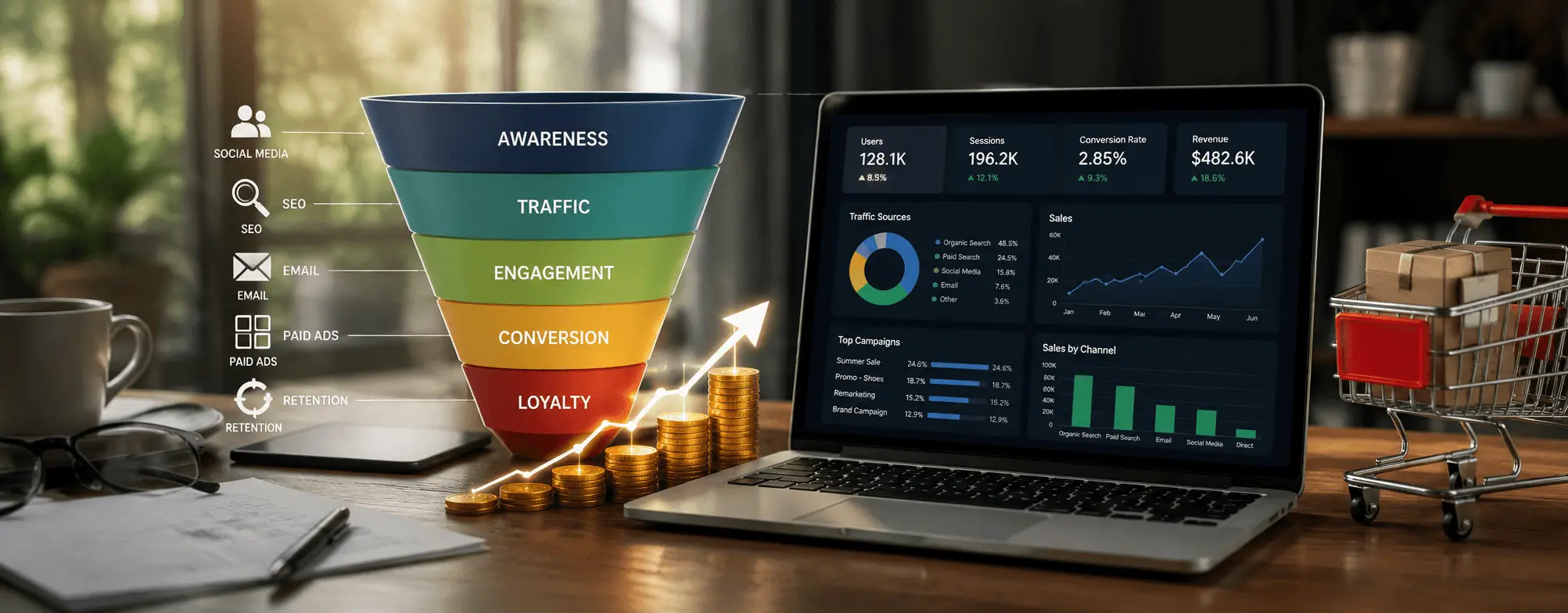
- Why more traffic rarely fixes a revenue problem
- The five funnel stages that turn visitors into lifelong customers
- How SEO, CRO, email & SMS and AI SEO connect into one revenue engine
- A practical checklist to optimize every stage of your funnel
The Traffic Obsession Is Costing Ecommerce Brands Millions
Ask most ecommerce founders what they want more of and the answer is almost always: "We need more traffic."
But traffic rarely solves the real problem. Many brands generate hundreds of thousands of visitors every month yet struggle to scale profitably, while competitors with significantly less traffic outperform them because they optimize every stage of the customer journey.
Revenue isn't generated at the top of the funnel. It's generated throughout the funnel.
In 2026 the winning brands aren't asking "How do we get more visitors?" They're asking "How do we maximize value from every visitor we already have?"
The shift from chasing clicks to building a connected system is the difference between expensive growth and sustainable, profitable growth. This guide breaks down the exact full-funnel approach that turns traffic into revenue, stage by stage.
What Is Full-Funnel Marketing?
Full-funnel marketing is the process of optimizing every stage of the customer journey, from initial awareness to long-term advocacy. Instead of treating channels independently, it connects them into one revenue-generating ecosystem.
That ecosystem has four core jobs: acquiring customers, converting customers, retaining customers and turning customers into advocates.
Why It Matters in 2026
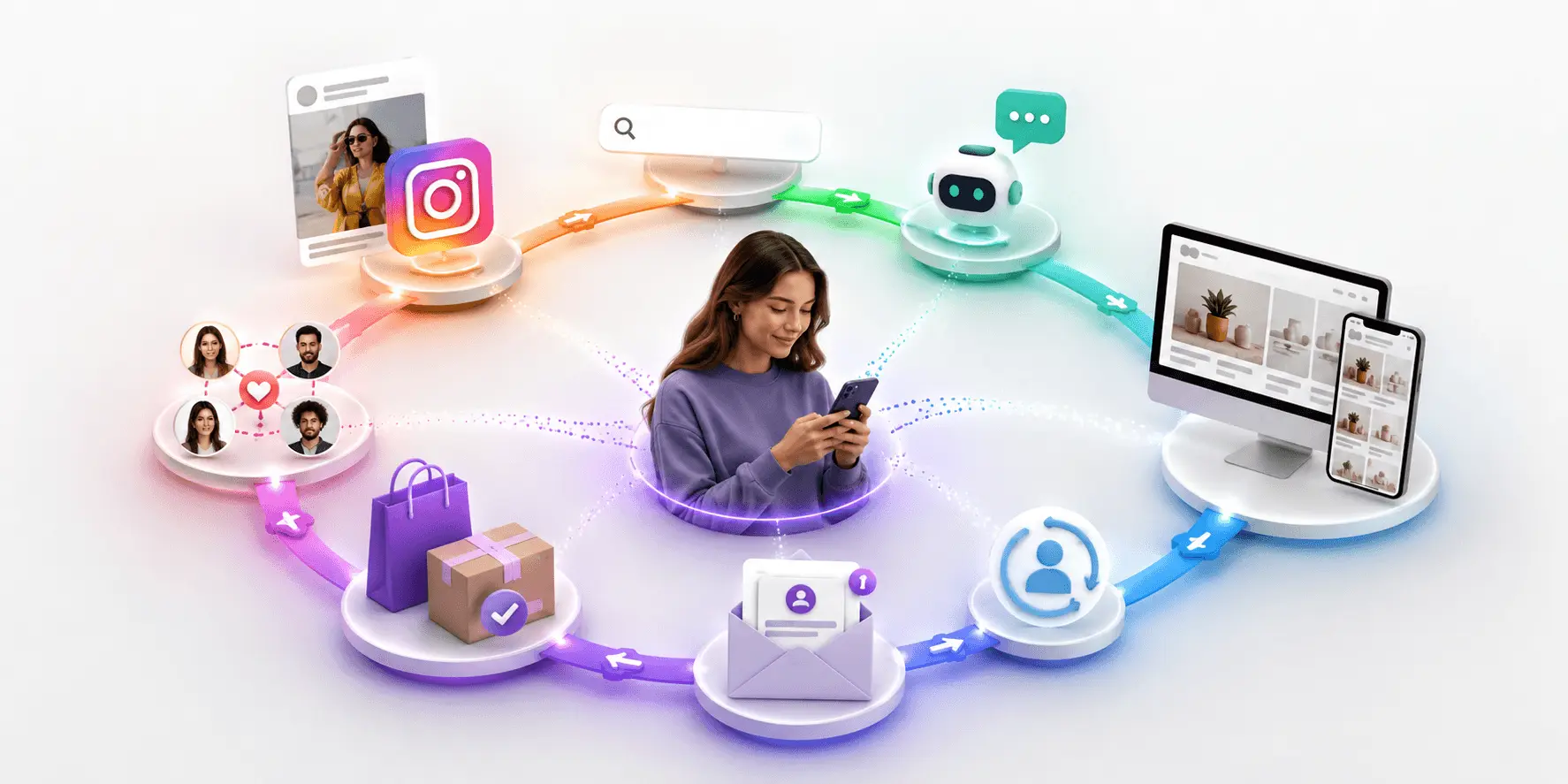
Consumer journeys have become complex. A customer may discover your brand through Instagram, research you on Google, ask ChatGPT for recommendations, visit your website multiple times, join your email list, purchase days later and refer a friend weeks afterward.
The brands that nurture every touchpoint outperform those focused solely on clicks. The 2026 revenue funnel moves through five connected stages: Awareness, Consideration, Conversion, Retention and Advocacy.
Acquiring a new customer can cost roughly five times more than retaining an existing one, which is why the lower funnel often drives the most profit.
Awareness: Introduce Your Brand to the Right People
Goal: introduce your brand to potential customers. The customer mindset here is "I have a problem" or "I'm exploring options."
This is where demand is created. The most effective awareness channels in 2026 include:
- SEO through educational content, buying guides and category optimization
- AI SEO for visibility within ChatGPT, Gemini, Claude and Perplexity
- Paid social across Meta, TikTok and Pinterest
- Influencer partnerships
- PR and brand mentions
- Organic social media
Metrics to watch: reach, impressions, traffic growth, brand searches and engagement rates. According to Think with Google, modern buyer journeys are longer and more fragmented than ever, so a strong awareness layer feeds every stage beneath it.
Most brands overinvest in awareness without strengthening the lower funnel. Awareness without conversion simply creates expensive traffic that never turns into revenue.
Consideration: Build Trust and Reduce Uncertainty
Goal: build trust and reduce uncertainty. The customer mindset shifts to "Can I trust this brand? Is this product right for me?"
This is where buyers compare, research and look for reassurance. The assets that move them forward include product reviews, buying guides, comparison content, FAQs, product videos, user-generated content, email nurturing and social proof.
At this stage customers are quietly asking themselves four questions:
- Is this worth the price?
- Does it solve my problem?
- What do others think?
- Why should I choose this brand over alternatives?
Answer those questions before they're even asked and you remove the hesitation that quietly kills conversions. Insights from the Nielsen Norman Group consistently show that clear, trustworthy experiences reduce friction and build buyer confidence.
Metrics to watch: time on site, email signups, product page engagement and return visitor rates.
Not Sure Where Trust Breaks Down?
Most stores lose buyers in the consideration stage without ever realizing it. Book a free growth audit and we'll review the trust gaps quietly costing you sales:
- Product page and review weaknesses
- Email nurturing and signup opportunities
- SEO & AI SEO content gaps
Conversion: Turn Interest Into Revenue
Goal: turn interest into revenue. The customer mindset becomes "Should I buy now?"
This is the stage where small improvements produce outsized results. The biggest conversion drivers are:
- Benefit-led copy
- Reviews & FAQs
- Trust signals near CTAs
- Sticky add-to-cart
- Guest checkout
- Multiple payment methods
- Exit-intent offers
- Cart recovery emails
- Mobile optimization
Metrics to watch: conversion rate, add-to-cart rate, checkout completion rate and revenue per visitor. The opportunity is enormous. The Baymard Institute puts the average cart abandonment rate near 70%, meaning most stores lose the majority of high-intent buyers right at the finish line. A structured conversion rate optimization program is how you reclaim that revenue.
Healthy Traffic, Hidden Revenue Loss
An ecommerce brand invested heavily in advertising and traffic looked healthy on the surface. However, a closer review revealed three problems:
- Product pages lacked trust elements
- Checkout created unnecessary friction
- Mobile experiences were weak
After addressing these issues, the business generated more revenue without increasing ad spend. The problem was never traffic. It was conversion efficiency. See a full multi-year growth case study here.
Retention: Maximize Customer Lifetime Value
Goal: maximize customer lifetime value. The customer mindset turns to "Was my purchase worth it? Should I buy again?"
Retention is often the fastest route to profitability, yet it's where most brands invest the least. The channels that compound revenue over time include:
- Welcome series and post-purchase flows
- Cross-sell campaigns and replenishment emails
- Win-back campaigns and SMS marketing
- Loyalty programs and personalized recommendations
Metrics to watch: repeat purchase rate, customer lifetime value, returning customer revenue and email-generated revenue. Research published by Harvard Business Review has long shown that small improvements in retention drive outsized gains in profit.
Acquisition drives growth. Retention drives profitability.
Owned channels do the heavy lifting here. According to Klaviyo and industry benchmarks, email and SMS can drive 20-40% of total ecommerce revenue once retention systems are in place.
Advocacy: Transform Customers Into Growth Assets
Goal: transform customers into growth assets. The customer mindset becomes "I love this brand. I want others to experience it."
This is the stage that turns your customer base into a marketing channel. The strategies that activate it include referral programs, review requests, VIP communities, UGC campaigns, ambassador programs and exclusive launches.
Metrics to watch: referral revenue, review volume, UGC submissions and net promoter indicators.
The most powerful marketing often comes from customers themselves. Trust generated through recommendations is difficult to replicate through advertising alone, and it feeds new, highly qualified traffic back into the top of your funnel.
Full-Funnel Team Structure
A connected funnel needs connected ownership. Here's how high-performing teams map specialists to each stage of the journey.
- SEO specialists
- AI SEO experts
- Media buyers
- Content marketers
- Content strategists
- Email marketers
- CRO specialists
- CRO experts
- UX designers
- Performance marketers
- Lifecycle marketers
- Email specialists
- SMS specialists
- Community managers
- Loyalty specialists
- Referral managers
Why Siloed Marketing Fails
When SEO teams focus only on rankings, paid teams only on ROAS and email teams only on open rates, nobody owns the customer journey. Revenue leaks between the cracks.
Full-funnel marketing eliminates these silos and creates a flywheel: traffic builds trust, trust drives conversion, conversion enables retention, retention fuels advocacy, and advocacy generates more qualified traffic. Growth compounds.
Breaking the Acquisition-Only Cycle
A business focused almost entirely on acquisition and generated significant paid traffic, but retention was weak, product experiences lacked trust and no referral systems existed.
After implementing a full-funnel approach:
- Educational SEO content strengthened awareness
- Enhanced product pages improved conversion
- Automated lifecycle emails lifted retention
- Loyalty initiatives and review collection activated advocacy
Revenue became more predictable, customer lifetime value improved, and growth no longer depended entirely on increasing budgets.
Need a Full-Funnel Growth Roadmap?
If your brand is generating traffic but growth has slowed, it may not need more advertising. It may need a better system. We'll review your acquisition channels, conversion bottlenecks, retention performance and growth marketing opportunities.
Schedule a Free Growth Strategy SessionThe 2026 Full-Funnel Checklist
Use this as a quick diagnostic. If you're missing items at any stage, that's where your revenue is leaking.
Create demand
- SEO
- AI SEO
- Paid social
- Influencers
- PR
Build trust
- Reviews
- FAQs
- Product videos
- Buying guides
- Email nurturing
Drive revenue
- Sticky add-to-cart
- Checkout optimization
- Trust signals
- Cart recovery
- Mobile CRO
Grow value
- Welcome flows
- Post-purchase
- Win-back
- Loyalty
- SMS
Compound growth
- Referral programs
- Review collection
- VIP programs
- UGC campaigns
Key Takeaways
The brands turning traffic into revenue in 2026 don't optimize one stage. They optimize all five:
- Awareness creates opportunity
- Consideration builds trust
- Conversion generates revenue
- Retention drives profitability
- Advocacy compounds growth
Master each stage and traffic becomes a predictable engine for sustainable revenue.
Frequently Asked Questions
Final Thought
The future of ecommerce growth doesn't belong to brands generating the most traffic. It belongs to brands extracting the greatest value from every customer interaction.
Awareness creates opportunity, consideration builds trust, conversion generates revenue, retention drives profitability and advocacy compounds growth. Master each stage, and traffic becomes a predictable engine for sustainable revenue. When you're ready to build it, our growth marketing team can help and you can review more results in our case studies.
Is Your Funnel Leaking Revenue?
We identify opportunities across SEO and AI SEO, paid acquisition, product pages, checkout, retention systems and referral programs. Turn this framework into a profitable growth engine for your brand.